
A decision journal for working life

Find the role that gives your week a truer shape.

Remuqavi is a quiet, practical place to examine your work direction. We use focused conversations, lived evidence and small experiments to help you orient toward roles that make sense in the actual terrain of your life.

A person reading a paper map in a sunlit greenhouse path
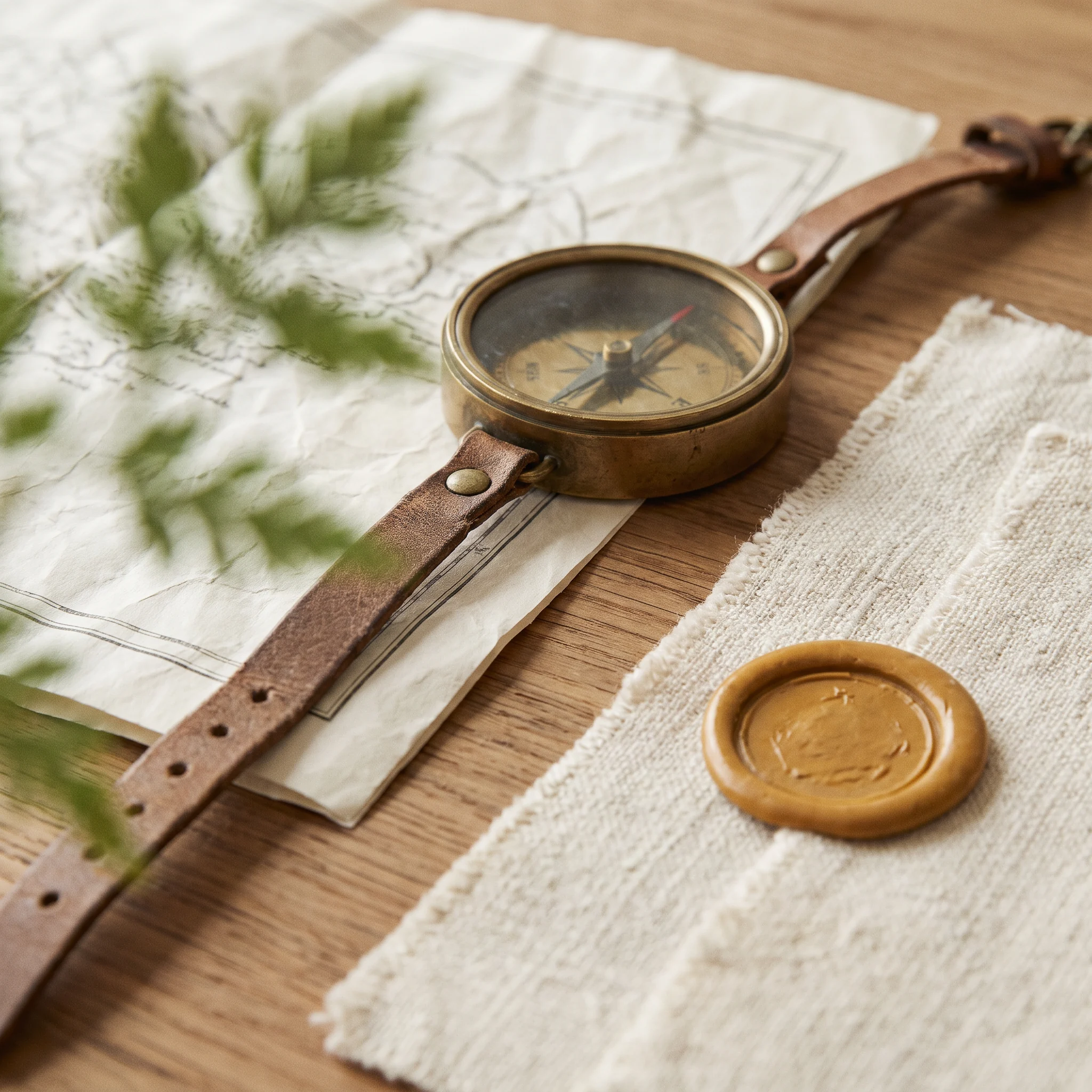
Compass on textured clothNorth is a practice
Route map / Begin with what is already in your hands
01 / Decision shelf

Take down the question that is actually asking for attention.

Choose a shelf label. The short reading changes, not to diagnose your situation, but to offer a more considered first way into it.

Field reading / for the present moment

When a role has become too small

Stuckness is often information, not a failure of drive. Before reaching for a dramatic answer, map the parts of your current role that ask too little, ask too much, or simply no longer belong to you. A clearer boundary can be a real beginning.

Start with the edge, not the exit.

Paper, small compass, dried plants and a map arranged as a field desk
Fold 1: your present commitments
Fold 2: the energy you protect
Fold 3: the work you are curious to try
02 / Starting conditions

A route is more useful when it begins where you truly are.

Career advice can skip too quickly to a destination. A field guide begins with the weather: your responsibilities, capacities, questions, relationships, resources and room for movement. That context is not a distraction from the work. It is the work.

Bring your real map.You do not need a polished story to begin. Loose notes, uncertainty and an unfinished thought are welcome.
03 / Compass principles

Four bearings for a considered move.

These are not rules for choosing quickly. They are prompts that keep the conversation close to your own evidence.

N
FIELD
01

Notice what repeats.

Pay attention to the tasks, environments and conversations that keep appearing in your strongest memories of work.

02

Keep the scale human.

A useful decision is small enough to test and specific enough to live with for more than an afternoon.

03

Let constraints speak.

Time, care, money, health and place shape what is possible. Their presence can make a plan more honest, not less ambitious.

04

Use language you believe.

We look for words that feel accurate in your mouth, so your next conversation does not require you to perform a borrowed identity.

A brass compass used as a field note detail
05 / Three conversations

The work gets clearer in company.

Mentoring here is not a script for a career. It is a set of attentive exchanges that help you sort signal from noise and take your own next step.

A mentor and participant seated together with an open notebook01
The listening conversation

Put the whole question on the table.

We slow down long enough to hear the question beneath the urgent one. That could include your current role, a shift you keep postponing, an idea you cannot yet name, or the conditions you need to keep intact.

Evidence before advice
Two people reviewing notes and pieces of paper at a round wooden table02
The sorting conversation

Separate the route from the scenery.

Together, we make distinctions: what is a real requirement, what is a familiar fear, what needs research, and what only becomes clear when you try it. A thoughtful sort can reduce the pressure to decide perfectly.

Conditions, questions, experiments
Three people in a considered conversation around a table outdoors03
The next-step conversation

Leave with a move you can make.

We translate reflection into an action with a sensible size: a conversation to request, a role description to annotate, a boundary to test, or a short piece of writing that tells the truer version of your work story.

One credible next move
06 / Choice path

Give the question a few coordinates.

There is no result to earn here. Select the responses that feel closest today and see a guidance note change beside your choices.

Where is the pull?
What would help first?
How much room is there?
A notebook, cup, laptop and field notes on a working table
Working table / after the conversation
07 / Reflective working table

Keep the notes that change the next question.

A session can give you a lot to hold. We favour a short, usable record over a polished summary, so the reflection can travel back into ordinary workdays.

  1. 01What I noticed: the language, conditions or patterns that carried energy.
  2. 02What I am testing: one action small enough to complete without needing a complete reinvention.
  3. 03What I will revisit: the question that deserves more evidence, time or a different conversation.
A quiet table by a window prepared for reflective work
08 / What a next conversation can include

A session has room for the practical and the unfinished.

We can examine what is working, what is draining, and what has become difficult to explain. This can be useful whether you are considering a change or trying to make your present work more sustainable and more recognisably yours.

Rather than stacking job titles against each other, we can compare the conditions around them: learning, rhythm, responsibility, people, place, stability, visibility and the kind of problems you would spend time with.

We can shape questions for an informational conversation, a check-in with a manager, a return-to-work discussion or a first meeting with someone in a field you are exploring. The focus is clarity, not performance.

You can leave with a concise field note: what you are taking seriously, one action you are willing to try, and the signal you want to pay attention to afterward. It is a record for you, not a prescription.

09 / FAQ

Questions before you write.

If your question is not here, you are welcome to use the contact form below.

A person writing in a notebook by a window

Remuqavi is for people who are trying to understand a work question with more care than a quick list of options allows. You might be settled but restless, considering a change, returning after time away, or looking for language for experience that does not fit neatly into a title. You do not need to arrive with a final plan.

No. A résumé can be useful when you want to look at your professional story, but it is not an entry requirement. You can begin with a few sentences about the question you are carrying, the work context you are in, and what you hope might feel clearer after a conversation. Uncertainty is a valid starting condition.

The form creates a browser-only confirmation on this website; it does not send information automatically. To make direct contact, use the visible email address and include a brief note about your question. That lets you decide exactly what to share and keeps the first exchange straightforward and personal.

No. The purpose of coaching here is not to hand you a verdict or to make a promise about an outcome. It is to make space for careful attention, better questions and practical next moves. The direction remains yours, informed by your circumstances, values, responsibilities and the evidence you gather along the way.

10 / Make contact

Bring one live question. We can begin there.

Use this form to collect your thoughts, then contact Remuqavi directly by email. The form is intentionally browser-only: it will show a confirmation in this page but does not send or store your message.

[email protected]
People working with maps and notes around a sunlit table

Draft your note

This form does not transmit data. For direct contact, email [email protected].

Your note is ready to carry forward. This browser-only form has not sent or stored it. To contact Remuqavi, email [email protected] with the details you choose to share.